

How Precision Machining Supports Consistency in Modern Manufacturing Systems
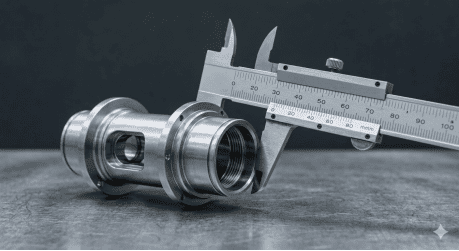
In manufacturing, forming processes define shape, but they do not always define precision. As components become more complex and assemblies more demanding, there comes a point where forming alone is not enough. That is where machining steps in – not as an alternative, but as a necessary complement.
Those of us who work with high-precision assemblies understand that machining is often what transforms a formed part into a functional component. It brings surfaces into tolerance while preserving alignment and stabilising geometry for real-world performance.
What Precision Machining Really Enables
Machining plays a critical role in achieving the level of accuracy required in modern manufacturing systems. While forming provides the base structure, machining refines it.
Key outcomes enabled by precision machining include:
- Tight dimensional tolerances, essential for assembly fitment
- Controlled surface finishes, improving functional performance
- Alignment accuracy, particularly in rotating or load-bearing systems
- Repeatable geometry, for consistency across production batches
Without machining, even well-formed components can fall short in applications where precision is non-negotiable.
Where Machining Becomes Critical
Certain applications demand machining not as an option, but as a requirement. These include:
- Tubular components, where internal and external accuracy must be maintained
- Fitment-sensitive assemblies, requiring precise interfacing between parts
- Oil seal and spring integration systems, where alignment affects performance
- Structural components, where geometry must remain stable under load
In such cases, machining brings each component to the exact specifications required for integration.
The Challenge of Maintaining Consistency at Scale
Precision is not just about achieving accuracy once – it is about maintaining it across thousands of components. This introduces several challenges:
- Tool wear, which can gradually affect tolerances
- Process variation, especially in long production runs
- Inspection discipline, required to maintain quality standards
- Repeatability, ensuring each part matches the previous one
Managing these factors requires a controlled machining environment supported by consistent process monitoring.
Industry Insight: Why OEMs Depend on Machining Discipline
Across automotive and industrial sectors, OEMs are placing increasing importance on machining capability when evaluating suppliers. The reasons are clear:
- Export markets demand consistent quality and traceability
- Assemblies require precise fitment across multiple components
- Performance expectations leave little room for deviation
- Supplier audits now focus on process capability, not just output
As a result, manufacturers who operate as a reliable precision CNC machining supplier in India are expected to deliver not just accuracy, but consistency over time.
Applications Supported by Precision Machining
Machined components play a role in systems such as:
- Automotive engines and drivetrain assemblies
- Oil seal structural components
- Tubular assemblies in suspension and alignment systems
- Industrial equipment requiring rotational accuracy
Across these applications, machining helps components integrate seamlessly and perform as expected.
Precision Is Maintained, Not Achieved Once
At Citizen Components, machining is treated as a stabilising force within the manufacturing process. It produces components from forming and other processes that meet the exact requirements needed for assembly and performance.
By maintaining control over machining operations, we support manufacturers who depend on consistent geometry and reliable fitment across production cycles.
Because in modern manufacturing, precision is not a one-time achievement – it is a continuous discipline.
Looking for machining precision that holds across production volumes?
Connect with Citizen Components to explore CNC machining capabilities built for consistency and performance.
Our Valued Clients












 Back To Top