

Engineering Integrity at the Interface: Rubber-to-Metal Bonded Systems Explained
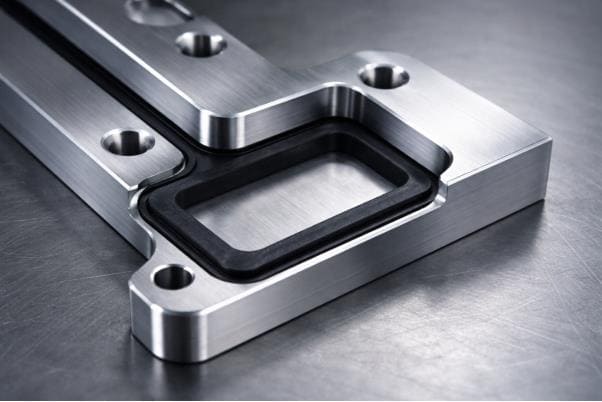
In modern mechanical systems, strength alone is not enough. Flexibility alone is not enough. Real-world performance often depends on how effectively rigid metal and resilient elastomer are engineered to function together.
As engineers, we understand that the interface between materials is where performance is either secured or compromised. In suspension systems, sealing assemblies and vibration-sensitive components, rubber-to-metal bonded systems quietly absorb stress, dampen movement and protect structural integrity.
At Citizen, we focus on the metal side of that interface – designing and manufacturing precision components that enable reliable bonding. This disciplined approach defines our role as a trusted rubber-to-metal bonded parts manufacturer supporting demanding automotive and industrial applications.
The Science Behind Rubber-to-Metal Bonding
Rubber-to-metal bonding is not merely an adhesive process – it is an engineered integration of two fundamentally different materials.
Metal provides:
- Structural strength
- Dimensional stability
- Load-bearing capability
Rubber provides:
- Elasticity
- Shock absorption
- Vibration damping
For the system to perform, the bond between these materials must withstand:
- Cyclic loading
- Temperature variation
- Rotational and axial movement
- Long-term fatigue stress
The reliability of that bond begins with precision metal geometry, controlled surface preparation and dimensional accuracy. If the metal component is poorly formed, inconsistent in thickness, or geometrically unstable, the bond itself becomes vulnerable.
Why Bonded Components Matter in Real Applications
In automotive and industrial assemblies, rubber-to-metal bonded components play a critical role in:
- Suspension and load-bearing systems
- Vibration-dampening mounts
- Oil seal metal casings integrated with elastomers
- Structural assemblies exposed to dynamic stress
When bonding is engineered correctly, the result is:
- Lowered noise, vibration and harshness (NVH)
- Improved component lifespan
- Stable load transfer
- Enhanced operational reliability
When bonding is poorly controlled, failure typically occurs at the interface – often under the most demanding conditions.
Citizen’s Role in Rubber-to-Metal Bonded Systems
At Citizen, we manufacture precision sheet metal stampings and formed parts specifically designed to support reliable elastomer bonding.
Our capabilities include:
- Sheet metal stamping components engineered for bonding compatibility
- Controlled forming processes for consistent geometry
- Deep-drawn components with uniform wall thickness
- Dimensional stability to maintain bonding integrity under load
We understand that in rubber-to-metal systems, the metal component is not passive – it is foundational. Also, we maintain strict control over geometry, material behaviour and repeatability so that the bonding process has the structural precision it requires.
As a rubber-to-metal bonded parts manufacturer, our responsibility lies in delivering metal components that integrate seamlessly with elastomer systems, enabling long-term durability and consistent performance.
Industry Insight: Rising Expectations at the Interface
Global OEMs are placing greater scrutiny on bonded components than ever before. The reason is clear: as vehicle designs become lighter, quieter and more efficient, tolerance for vibration, misalignment, and premature fatigue is decreasing.
Today’s buyers prioritise suppliers who can:
- Maintain tight dimensional tolerances
- Keep up the repeatable forming processes
- Support high-volume production without geometric drift
- Align the metal design with bonding performance requirements
The shift is no longer toward sourcing components in isolation, but toward partnering with manufacturers who understand system behaviour.
Engineering at the Interface is a Responsibility
At Citizen, we view rubber-to-metal bonding not as a single operation, but as an engineered relationship between materials.
We do not claim to manufacture everything. Instead, we refine what we specialise in – precision metal components that enable strong, durable bonding performance.
When you work with Citizen, you engage with a manufacturer that understands how metal geometry influences bonding integrity and how bonding integrity influences system reliability.
Because in high-performance applications, the interface is not a detail – it is the difference.
Looking for a dependable rubber-to-metal bonding partner?
Connect with Citizen to explore precision-engineered metal components built to perform at the interface.
Our Valued Clients











 Back To Top