

The Metal Behind the Seal: Engineering Components That Define Oil Seal Performance
Sealing Performance Begins with Structural Integrity
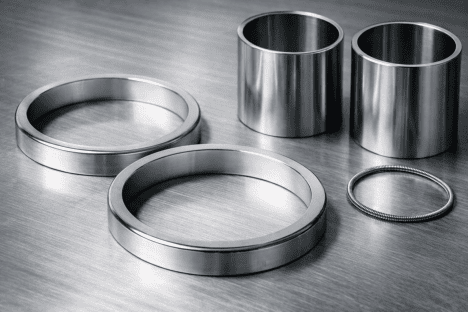
When we speak about oil seals, the conversation often revolves around elastomers, lip design and lubrication. Yet those who understand sealing systems at a deeper level know that performance begins much earlier – with the metal structure that gives the seal its shape, rigidity and stability.
An oil seal is not merely a flexible lip. It is an engineered assembly where metal components define concentricity, press-fit stability and long-term dimensional integrity. If the metal foundation is compromised, no elastomer can compensate.
At Citizen, we focus on engineering and manufacturing the metal components used within oil seal systems – delivering the structural precision that allows sealing performance to remain consistent under demanding conditions.
Understanding the Structural Role of Metal in Oil Seal Systems
In a dynamic sealing environment, the metal casing performs several critical functions:
- Maintains geometric stability under installation pressure
- Keeps concentric alignment with rotating shafts
- Provides rigidity against deformation during operation
- Supports consistent elastomer bonding
- Houses and stabilises garter springs
These responsibilities demand far more than simple stamping. They require controlled forming, dimensional discipline and material consistency.
As engineers, we recognise that oil seal reliability is often determined not by the visible elastomer, but by the invisible precision of the metal shell.
Engineering Considerations in Metal Oil Seal Components
Manufacturing metal components for oil seal applications requires careful attention to:
- Material thickness control, for structural strength without distortion
- Roundness and concentricity, critical for shaft alignment
- Press-fit tolerance accuracy, influencing installation performance
- Surface quality, supporting reliable elastomer bonding
Minor deviations in geometry can introduce leakage risk, uneven wear, or premature failure. That is why process control at the forming stage becomes decisive.
Citizen’s Role in Oil Seal Manufacturing Ecosystems
Citizen does not manufacture complete oil seals. Instead, we specialise in producing the precision metal parts that enable oil seals to function reliably.
Our capabilities include:
- Sheet metal stamping components used as oil seal casings and shells
- Deep-drawn metal components engineered for dimensional stability
- Tubular machining support for alignment-critical assemblies
- Integration compatibility with in-house garter spring manufacturing
In industry conversations, the term metal oil seals manufacturer is often used broadly. In our case, our expertise lies in manufacturing the metal components that form the structural backbone of oil seal assemblies for a strong and accurate base before elastomer integration even begins.
Industry Insight: Why Global Buyers Focus on the Metal Core
Across automotive and industrial supply chains, buyers are increasingly attentive to the metal core of sealing systems.
The reasons are practical:
- Leakage issues often trace back to casing distortion
- Assembly inconsistency originates from dimensional variation
- High-volume production exposes weaknesses in forming control
- Export markets demand long-term repeatability
OEMs today prefer suppliers who understand how metal precision influences sealing reliability over time – not just during initial testing.
Applications That Depend on Structural Precision
The metal components we manufacture support oil seal systems used in:
- Automotive engines and transmissions
- Axle and drivetrain assemblies
- Two-wheeler and three-wheeler systems
- Industrial rotating machinery
In each application, the expectation remains consistent: stable geometry, reliable fitment and predictable performance across extended operating cycles.
Precision at the Core of Every Seal
At Citizen, we approach oil seal-related manufacturing from the inside out. We understand that the elastomer may contact the shaft, but it is the metal structure that preserves alignment, stability and long-term functionality.
By focusing on controlled forming, dimensional accuracy and integration-ready metal components, we contribute to oil seal systems that perform reliably in demanding environments.
Because in sealing technology, strength at the core defines performance at the edge.
Sourcing precision metal components for oil seal applications?
Partner with Citizen for structurally accurate, OEM-ready metal parts engineered for long-term sealing performance.
Our Valued Clients











 Back To Top