

The Role of Welding Precision in Structural Integrity and Assembly Performance
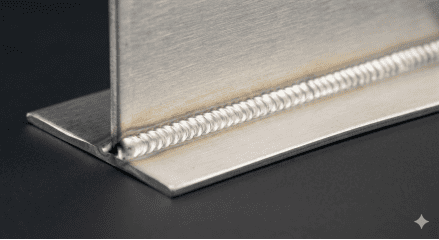
In any engineered structure, strength is rarely determined by the individual parts alone. More often, it is defined by how those parts are joined. A perfectly formed component can lose its reliability if the joint that connects it introduces stress, distortion, or inconsistency.
For those of us working within manufacturing systems, this is a familiar reality. Welding is not just a joining process – it is a critical stage where material behaviour, heat control and alignment must be managed with precision. In automotive and industrial applications, the integrity of welded joints directly influences how components perform under load, vibration and long-term use.
Why Welding Precision Matters
Welding introduces heat, and with it comes the risk of material distortion, residual stress and structural imbalance. Precision in welding is important to control the effects and not allow them to compromise the component.
Key aspects influenced by welding precision include:
- Structural strength, so that joints can withstand operational loads
- Load distribution, preventing stress concentration at weak points
- Dimensional stability, maintaining alignment across assemblies
- Fatigue resistance, especially under cyclic loading conditions
When welding is executed with discipline, it enhances the overall performance of the assembly. When it is not, even minor inconsistencies can lead to premature failure.
Challenges in Sheet Metal Welding
Working with sheet metal introduces additional complexity. Compared to thicker materials, sheet metal is more sensitive to heat and deformation, making precision even more critical.
Common challenges include:
- Distortion control, particularly in thin sections
- Alignment accuracy, so that components fit correctly after welding
- Consistency across batches, especially in high-volume production
- Heat management, to prevent weakening of material properties
These challenges require controlled processes and a deep understanding of how metal behaves under thermal influence.
Welding in Real Automotive Applications
In automotive systems, welding is integral to the performance of multiple components. These include:
- Structural brackets and supports
- Chassis-related assemblies
- Suspension components
- Reinforcement elements in load-bearing systems
In such applications, welding quality directly affects safety, durability and long-term performance. A deviation at the joint level can propagate through the entire system.
Industry Insight: The Shift Toward Controlled Welding Systems
As automotive systems become more refined, OEMs are placing greater emphasis on welding precision. This shift is driven by several factors:
- Higher expectations for durability and fatigue life
- Increased focus on dimensional accuracy in assemblies
- Export requirements demanding consistent quality
- Reduced tolerance for variability in high-volume production
Manufacturers are therefore moving toward more controlled and repeatable welding processes, often supported by standardised procedures and quality checks. This shift has also increased demand for suppliers capable of delivering the best sheet metal welding solutions with consistency rather than variability.
Applications That Depend on Welding Precision
Welded components produced through controlled processes are widely used in:
- Automotive structural assemblies
- Suspension systems
- Oil seal-related metal components
- Industrial equipment requiring load-bearing integrity
Across these applications, the expectation is clear – stable joints, consistent quality and long-term reliability.
Strength Is Defined at the Joint
At Citizen Components, we recognise that welding is not just a step in manufacturing – it is a defining factor in how components perform in real-world conditions. By maintaining control over alignment, heat input and process consistency, we support assemblies that retain their structural integrity over time.
Because in precision manufacturing, it is not enough for a component to be strong – the joint must be stronger.
Looking for consistent welding quality in sheet metal components?
Connect with Citizen Components to explore manufacturing solutions built for structural integrity and performance.
Our Valued Clients











 Back To Top